更新日期:2024年11月4日
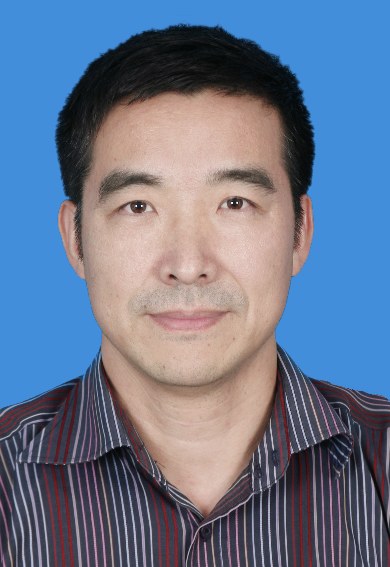
|
|
姓 名
|
张建国
|
性 别
|
男
|
|
出生年月
|
1968年1月
|
籍贯
|
内蒙古察右后旗
|
|
民 族
|
汉族
|
政治面貌
|
民建
|
|
最后学历
|
博士研究生
|
最后学位
|
|
|
技术职称
|
教授
|
导师类别
|
博、硕导
|
|
行政职务
|
主任
|
Email
|
zhangjg@scau.edu.cn
|
|
工作单位
|
华南农业大学
|
邮政编码
|
510642
|
|
通讯地址
|
广州市天河区五山
|
|
单位电话
|
020-38604789
|
|
个人主页
|
|
|
 个人简介
个人简介
广东省“千百十工程”省级培养对象, 甘肃省飞天学者,华南农业大学草学学科带头人、南方草业研究中心主任。1968年1月生于内蒙古。 1988年本科毕业于哲里木畜牧学院(现内蒙古民族大学),1991年硕士毕业于甘肃农业大学,而后在西南农业大学(现西南大学)任助教、讲师。1994年获日本政府奖学金赴日攻读博士学位,1997年从日本国立爱媛大学获得博士学位后,分别在日本国立草地研究所和国立畜产草地研究所做博士后和特别研究员,2006年3月回国。2013-2014年在美国加州大学伯克利分校访学1年。主要从事饲草料生产与加工利用、草地畜产环境、应用微生物等方面的教学、研究工作, 在国内外相关学术刊物发表论文140多篇, 授权发明专利8件、实用新型专利3件,获国家科技进步奖二等奖1项、省部级科技一等奖1项,参编中、英、日文著作9部、制定标准9项,主持国家自然科学基金面上项目、基金重点项目子课题、国家重点研发计划子课题、广东省科技计划等项目20多项。任SCI期刊Grassland Science 编委。2009年在广州组织召开了“第一届中日饲料研讨会”,2017年在广州承办了“中国草学会年会”。
工作经历
2006/3- 至今, 华南农业大学 , 草业科学系, 教授,博导
2013/10- 2014/9, 美国加州大学伯克利分校 , 植物与微生物学系, 访问学者
2000/1- 2006/2, 日本国立畜产草地研究所 , 资源循环研究组, 特别研究员
1997/10- 1999/12, 日本国立草地研究所 , 饲料加工评价研究室, 博士后
1991/7- 1994/9, 西南农业大学 , 动物养殖学院, 助教、讲师
1992/9- 1993/8, 四川省云阳县龙角区 , 挂职区长助理
教育经历
1994/10-1997/9, 日本国立爱媛大学, 草业科学, 博士
1988/9-1991/7, 甘肃农业大学, 草业科学, 硕士
1984-1988, 哲理木畜牧学院, 草业科学, 学士
获奖、荣誉称号
国家科技进步奖二等奖1项,省部级科技进步奖一等奖1项
广东省“千百十工程”省级培养对象, 甘肃省飞天学者
社会、学会及学术兼职
教育部高等学校草学类专业教学指导委员会委员,中国草学会常务理事、草产品加工专业委员会副主任委员,中国奶业专家库第一批专家;广东省政协委员,民建广东省委员会人口资源环境专业委员会主任。
研究领域
饲草料生产与加工利用,乳酸菌应用,能源草利用转化
科研项目
主要主持课题
1. 新型添加剂对全混合发酵日粮营养安全和饲养性能的功效研究(国家重点研发计划项目课题,2022YFE0111000-2,2022-2025);
2. 乳酸菌有氧环境快速生长的机制及在青贮中的应用(国家自然科学基金,31971764,2020-2023);
3. 广东省现代草牧业(羊)产业技术体系岗位专家(2019KJ127,2019-2023);
4. 影响牧草表面乳酸菌分布的主要因素、机理及对青贮发酵的调控(国家自然科学基金,31672486,2017-2020);
5. 热带亚热带地区优质青贮饲料调制技术研究与示范(国家重点研发计划子课题,2017-2020);
6. 饲用全株小麦高效种植与青贮技术研究与示范(广东省科技计划项目,2016-2018);
7. 林下种草关键技术及林草复合经营的综合效益研究(广东省林业科技创新项目,2016-2019);
8. 冬闲田优质牧草资源开发与草畜高效转化利用技术研究(十二五国家科技计划子课题,2011-
2015);
9. 乳酸菌抑制青贮饲料好氧变质的机理与适宜条件研究(国家自然科学基金,2010-2012)。
10. 农业•食品加工副产物奶牛高效利用研究 (广东省高等学校人才引进专项基金, 2009-2011)。
发表论文
通讯作者:
1. Gas production characteristics of oat and tritical silages and techniques for reducing gas emissions. Journal of Integrative Agriculture, 2024, Doi:10.1016/j.jia.2024.09.023.
2. Additives improve the fermentation quality, anthocyanin content, and biological activity of purple napier grass silage. Journal of the Science of Food and Agriculture, 2024, DOI 10.1002/jsfa.13903
3. Respirative metabolism improves the growth performance and stress response properties of Lactiplantibacillus plantarum SXC48. LWT – Food Science and Technology, 2024, 198: 115216.
4. Effects of tillage and maturity stage on the yield, nutritive composition and silage fermentation quality of whole-crop wheat. Frontiers in Plant Science, 2024, 14: 1357442
5. Yield and nutrient composition of forage crops and their effects on soil characteristics of winter fallow paddy in South China. Frontiers in Plant Science, 2024, 14: 1292114
6. Improving the quality and reducing harmful microbes of total mixed ration silage with dried soybean curd residue. Chemical and Biological Technologies in Agriculture, 2023, https://doi.org/10.1186/s40538-023-0046-0
7. Combined metabolomic and proteomic analyses reveal the aerobic and respirative life-style of Lactobacillus plantarum SXC48. LWT – Food Science and Technology, 2023, https://doi.org/10.1016/j.lwt.2023.115216
8. Fermentation quality and bacterial community of delayed filling stylo silage in response to inoculating lactic acid bacteria strains and inoculating time. Chemical and Biological Technologies in Agriculture, 2023, 10: 44
9. Effects of leaf properties on the population size of microbes on the leaf surfaces in wheat, rye and triticale. FEMS Microbiology Ecology, 2023, 99: 1-10. DOI: 10.1093/femsec/fiad024
10. Influence of no-tillage on the yield and silage fermentation quality of Italian ryegrass. Grassland Science, 2023, 69(4): 239-252.
11. Effects of leaf morphological and chemical properties on the population sizes of epiphyte. Microbial Ecology, 2023, 85(1): 157-167.
12. Effects of sowing methods on nitrogen compounds and protease activities of whole-crop wheat silage. Grassland Research, 2023, 2:46-55.
13. Fermentation quality and protein changes of four Pennisetum grass silage. Grassland Science, 2022, 68: 319-327.
14. Effects of wilting in a cloudy day and storage temperatures on the fermentation quality and microbial community of Napier grass silage. Journal of the Science of Food and Agriculture, 2022, 102: 4384-4391.
15. Effects of leaf morphological and chemical properties on the population sizes of epiphyte. Microbial Ecology, 2022, 10.1007/s00248-022-01963-4.
16. Characterization and biological activity of a novel exopolysaccharide produced by Pediococcus pentosaceus SSC-12 from silage. Microorganisms, 2022, 10(1), 18.
17. Spraying sugars, growth temperatures and N application levels change epiphytic LAB composition on Italian ryegrass. Grassland Science, 2022, 68(2): 145-154.
18. Effects of wheat-legume cultures on the fermentation quality and protein degradation of silage. Grassland Science, 2022, 68(1): 13-22.
19. Changes of the fermentation quality and microbial community during re-ensiling of sweet corn stalk silage. Italian Journal of Animal Science, 2022, 21(1): 168-177.
20. Dried soybean curd residue: a promising absorbent for cleaner production of high-quality silage. Journal of Cleaner Production, 2021, 324: 12930.
21. Effects of re-ensiling on the fermentation quality and microbial community of Napier grass (Pennisetum purpureum) silage. Journal of the Science of Food and Agriculture, 2021, 101(12):5028-5037.
22. Cover crops can produce livestock forage in Chinese subtropical regions. Agronomy Journal, 2021, 113(2): 1535-1547.
23. Microbial colonization on the leaf surfaces of different genotypes of napier grass. Archives of Microbiology, 2021, 203(1): 335-346.
24. The suitable condition for Lactobacillus parafarraginis ZH1 producing hexadecanoic acid and inhibiting pathogenic and spoilage yeasts. Biological Control, 2020, 149: 104318.
25. Lactobacillus parafarraginis ZH1 producing anti-yeast substances to improve the aerobic stability of silage. Animal Science Journal, 2018, 89: 1302-1309.
26. Factors influencing the distribution of lactic acid bacteria on Pennisetum grasses. Grassland Science, 2017, 63: 150-158.
27. Effects of nitrogen application rate on the yields, nutritive value and silage fermentation quality of whole-crop wheat. Asian-Australasian Journal of Animal Science, 2016, 29(8): 1129-1135.
28. 大豆主要饲用性状的遗传分析与QTL定位. 中国草地学报, 2024, 46(8):29-36.
29. 大豆秸和稻草对甜玉米秸秆和湿啤酒糟混合青贮的影响. 草地学报, 2024, 32(3): 945-951
30. 耐低营养乳酸菌筛选及对难青贮牧草发酵品质的影响. 草业学报, 2023, 32(9): 222−230.
31. 艾蒿浸提液对6种牧草种子的萌发和幼苗生长的化感作用. 种子,2022, 41(10): 58-64.
32. 冬闲田混播小麦与豆科牧草对产量、品质和土壤特性的影响. 中国草地学报, 2022,44(9):66-74
33. 中国南方青贮饲料研究进展. 中国草地学报, 2022,44(6): 106-114.
34. 晾晒、添加物及不同温度对象草青贮发酵品质和微生物的影响. 草业学报, 2022, 31(7): 76−84.
35. 植物表面乳酸菌分布研究进展. 生物技术通报, 2021, 37(9): 3-10.
36. 粤北林下种草对林地土壤理化性质的影响. 中国草地学报, 2021, 43(8): 58-65.
37. 不同水分吸附材料对象草青贮发酵品质及好氧稳定性的影响. 草业学报, 2021, 30(7): 133-138.
38. 不同茬次和高度热研四号王草的乳酸菌分布及青贮发酵品质. 草业学报, 2021, 30(1): 150-158.
39. 饲用小麦生产与利用研究现状及发展前景. 草业学报, 2020, 29(10): 192-199.
出版专著和教材
1. 《草地灌溉与排水》(苏德荣主编)2022. 北京: 中国林业出版社
2. 《Research Progress on Forage Production, Processing and Utilization in China》(Edt Yang FY). 2021. Bei Jing: China Agricultural Science and Technology Press.
3. 《草食动物饲养学》(孙泽威、邓波主编)2015. 北京: 中国农业出版社.
4. 《Lactic Acid Bacteria》(Edt Zhang HP and Cai Y). 2014. Springer.
5. 《现代青贮理论与技术》(徐春城主编). 2013. 北京: 科学出版社.
6. 《草产品质量检测学》(贾玉山、玉柱、李存福主编). 2011. 北京: 中国农业大学出版社.
7. 《牧草饲料加工与贮藏》(玉柱、贾玉山主编). 2010. 北京: 中国农业大学出版社.
8. 《草业大辞典》(任继周主编). 2008. 北京: 中国农业出版社.
9. 《草地科学实验-调查法》 (日本草地学会编). 2004. 东京: 全国农村教育協会.
科研创新
第一完成人授权及申请的发明专利
1. 一株耐氧乳酸菌及其应用(ZL202111134189.X,授权2024.2.9)
2. 一株高产纤维素酶的芽孢杆菌及其应用(ZL202210598051.3,授权2023.8.15)
3. 一株耐低营养乳酸菌Lactobacillus plantarum SCLN1及其应用(ZL202111133491.3,,授权2023.7.10)
4. 一种提高乳酸菌保存存活率的培养基及其应用(ZL2019 1 1145640.0,授权2022.8.12)
5. 耐高温乳酸菌株HT1及其在调制青贮饲料方面的应用(ZL 2011 1 0118135.4,授权2013.10.13)
6. 一株耐低温乳酸菌Lactobacillus plantarum CCZZ1及其应用(ZL 2012 1 0192285.4,授权2014.5.28)
7. 一株乳酸菌Lactobacillus parafarraginis ZH1及其应用(ZL 2012 1 0192264.2,授权2014.9.24)
8. 干豆腐渣在高水分材料青贮调制中的应用(申请号201911145651.9)
教学活动
承担本科生课程: 草业科学专业概论、草产品加工利用
承担研究生课程:草学研究进展、饲草料加工贮藏
指导学生情况
每年接受本科生3-5名,硕士研究生2-3名,博士研究生1-2名。
我的团队
博士后:田静
博士生:陆永祥、郭香、吴娟燕
硕士生:李超、黄燕丽、周天宇、王艳艳、王育涵、崔可儿、刘盈池、白亚楠、杨婷、王广和